Offline meeting with live broadcast 02/03/2023 13:00
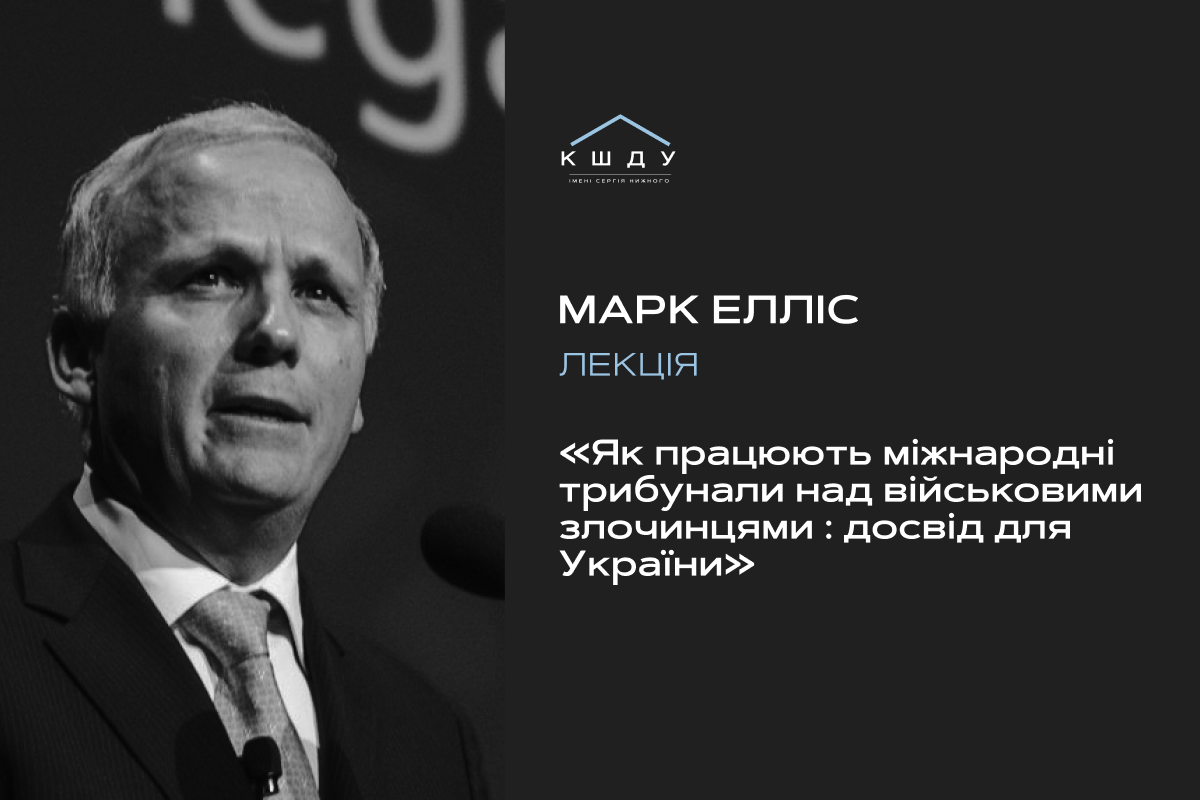
LECTURE BY MARK ELLIS
“How international tribunals for war criminals work: experience for Ukraine”
Mark Ellis is an expert in international criminal law and Executive Director of the International Bar Association. He has worked as a legal advisor to the tribunals for the former Yugoslavia, Cambodia, Rwanda, and participated in the trial of Saddam Hussein.
Mark served as legal advisor to the Independent International Commission on Kosovo and was appointed as an OSCE adviser on the establishment of the Serbian War Crimes Tribunal. He has been actively involved in the activities of the Iraqi Supreme Tribunal, and served as legal counsel to the defense team of Nuon Chea during the proceedings before the Extraordinary Chambers of the Courts of Cambodia (ECCC). He also assisted in the Hashim Thaci case before the Kosovo Special Chamber (KSC).
In 2013, Dr. Ellis was appointed to the List of Assistants to the Defense of the International Criminal Court. In 2015, he was appointed Chair of the UN Advisory Group on the Protection of the Mechanism of the International Criminal Tribunals (formerly the ICTY and the ICTR).
In addition, it was Mark Elias who initiated the creation of EyeWitness to Atrocities, a mobile phone application that allows you to store evidence of war crimes.
Free access
Event format
conversation (question/answer)
CLICK THIS IMAGE TO PLAY THE VIDEO
This event is directed to
discussion of mechanisms of responsibility of the Russian Federation for war crimes in Ukraine. To date, the petition for a special tribunal to punish Putin for the war in Ukraine has already collected almost 2 million signatures. Obviously, there should be a tribunal. How to make it uncompromising and effective? The experience of which countries should be used?
The lecture will be interesting for
- Ukrainian civil servants
- deputies of all levels
- Ukrainian investigators
- international experts
- investigators of the international criminal court
- diplomats
- political analysts and political scientists
- representatives of civil society
- the general public interested in the problems of modern democracy and the challenges of democratic development
THE MAIN TOPICS OF THE MEETING
- How to act to see war criminals tried before the war is over?
- How does the International Criminal Court work?
- Is it possible to hold the leadership of Belarus to account?
- Evidence of committed genocide. How to collect and use for prosecution?