Kyiv, 10 Dobrovolchykh Batalyoniv St
OFFLINE
Kyiv, 10 Dobrovolchykh Batalyoniv St
OFFLINE
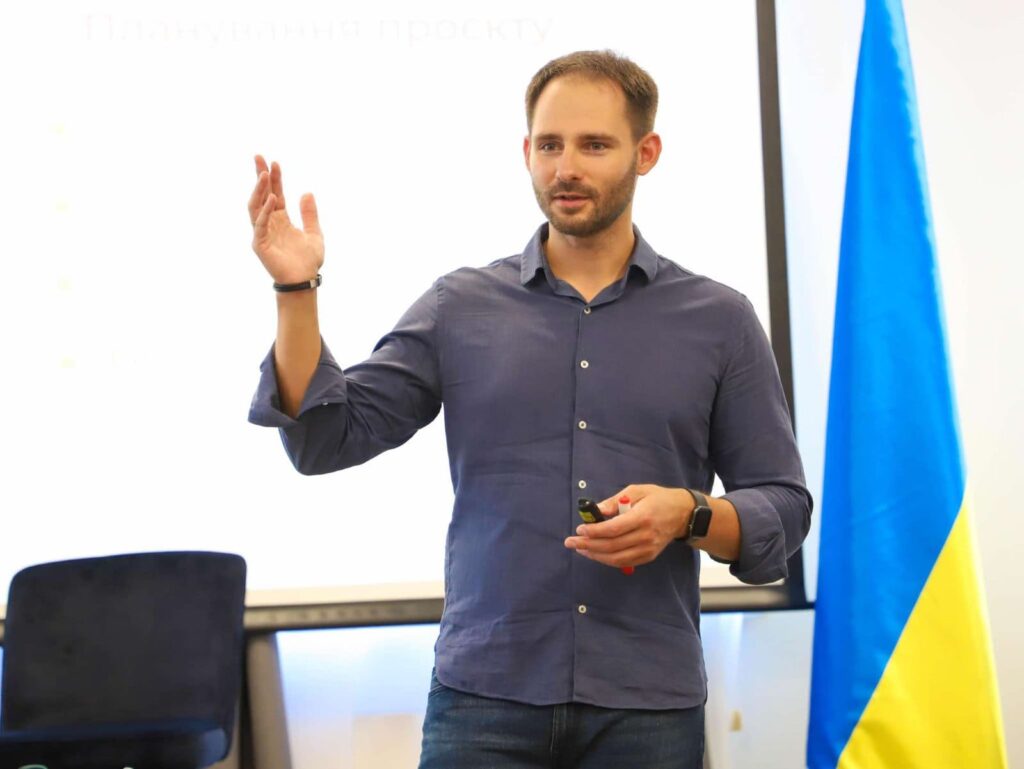 The training will help to implement project management in business, public or government sector and help managers build an effective system for managing operational processes in projects.
A successful project is the result not only of the team’s work, but also of effectively established operational processes that ensure coordinated interaction at every stage. This training will help you develop the ability to manage both team resources and operational processes to maximize results.
In today’s unpredictable environment, where processes are constantly changing and planning horizons are shrinking, it is important to learn how to play the long game and adapt effectively to new challenges. This training will provide you with the tools to develop a strategy for long-term project management in the face of dynamic change, while maintaining stability and efficiency.
The training is designed for both managers and project managers. Therefore, the emphasis is placed on what project management looks like in terms of organizational structure, management of the organization as a whole, and is implemented in specific project strategies.
Volodymyr Strashko

Volodymyr Strashko
CEO of Unicorn School, founder of the company HR You. Doctor of Philosophy in Economics (PhD), human capital expert. Certified business coach (l’ENA, Paris) and business school lecturer (Unit School of Business, IBS named after Alfred Nobel). Mentor and member of the Ethics Committee of the Board business community.

Module 1: Introduction to project management
Project management vs. traditional management: when and how to choose an approach.
Creating a project management culture in the organization: benefits and challenges.
Module 2. Project stakeholders and goal setting
Identifying stakeholders: impact analysis and interaction.
Setting project goals: SMART goals.
KPIs as a tool for measuring project success.
Module 3: Project roles and team dynamics
Definition of project roles.
Responsibilities of each role at different stages of the project.
Communication and interaction within the project team.
Module 4: Risk assessment and management
Identification and classification of risks in the project.
Risk assessment: qualitative and quantitative methods.
Risk prevention strategies and minimizing their impact.
Module 5: Project completion and evaluation of results
Finalizing the project: summarizing and analyzing the completed tasks.
Evaluation of results by KPIs: how to measure project success.
Post-project reflection and improving the effectiveness of future projects.
Practical part:
Developing a map of stakeholders and goals using real cases
Risk assessment and development of an action plan to prevent them
Introducing a project management culture through simulation exercises
Final discussion and QA

Implement a project management culture throughout the organization to improve team performance.
Improve interaction between departments by clearly defining roles and responsibilities in projects.
Evaluate the feasibility of the project approach in different situations and make informed decisions about management methods.
Increase the organization’s ability to adapt to change through the use of agile project management.
Effectively identify and manage risks in projects to minimize the negative impact on the end result.
Develop strategic project goals and monitor their implementation using KPIs.
Ensure long-term project success through the proper integration of project management into the organizational structure.
Modernize processes in the public sector by optimizing resources and increasing the transparency and efficiency of government programs and initiatives.
Increase the effectiveness of public organizations through a project-based approach to managing social initiatives and engaging stakeholders.
Kyiv, 10 Dobrovolchykh Batalyoniv St.