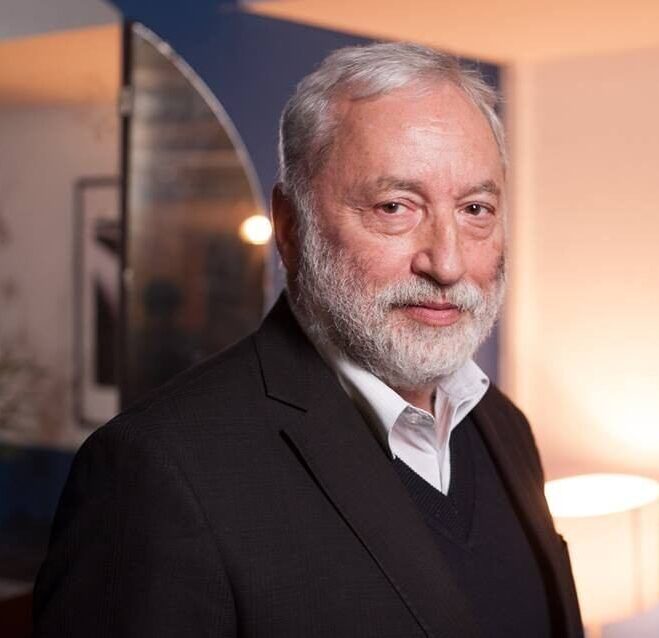
Evening studios with Joseph Zissels

The Paradoxes of Identity

Kyiv, 10 Dobrovolchykh Batalioniv St.

OFFLINE


The evening studios “ The Paradoxes of Identity” examine the main aspects of collective identity formation with a special emphasis on civilizational challenges. The evening studies will analyze the history of communities from the Middle Ages to the present, and will also address the issues of civilizational identity, conflicts and interaction between different peoples in the context of globalization.

The unique nature of the courses lies in the integration of different models of identity, geopolitical and socio-cultural processes, as well as contemporary political and general cultural trends, such as the right-wing conservative shift and its impact on the world order. The relevance is enhanced by the fact that modern society is faced with numerous challenges to its collective identity: from intense geopolitical conflicts to cultural and ethno-religious tensions that determine the future of nations and civilizations. You will learn how globalization, migration, technology, and political trends affect national and civilizational identities.

MENTOR

Joseph Zissels

The Paradoxes of Identity

Joseph Zissels Dissident.

Former political prisoner. Human rights activist. Co-president of the Association of Jewish Organizations and Communities (Vaadu) of Ukraine. Executive Vice President of the Congress of National Communities of Ukraine. Vice President of the World Jewish Congress. Member of the First of December Initiative Group. Member of the ROK Strategic Council. Deputy Chairman of the National Commission for the Rehabilitation of Victims of Political Repression.

Since the early 70s, he has worked with Jewish and general democratic dissident movements in the USSR. In 1978, he joined the Ukrainian Helsinki Group. He was twice sentenced to three years in prison for “slanderous fabrications that would defame the Soviet state and social system.” In 1988, he created the first Jewish organization in Ukraine in Chernivtsi. In 1989, he continues to take an active part in the creation of the People’s Movement of Ukraine. In 1990, he initiated and created the Council of Nationalities of the Rukh.

PROGRAM

  1. Introduction to identity theory using Jewish identity as an example.
  2. Civilizational identity and its features.
  3. The global right-wing conservative shift

THIS COURSE IS FOR

  1. Public and corporate sector
  2. Experts in international relations and sociology
  3. Politicians and social analysts
  4. Specialists in social engineering
  5. Experts in organizational development
  6. Civil society representatives
  7. Anyone who is looking for answers to questions about national identity and the new Ukrainian narrative.

WE RECOMMEND THIS COURSE TO THOSE WHO WANT TO

Understand the complexity of identity in the modern world.


Explore the influence of historical, social and political factors on the formation of various forms of collective “I”.

Analyze civilizational conflicts and global trends that shape our society today.


Explore the issues of cultural diversity and its impact on political processes.


Deepen understanding of modern types of identity in the context of Ukrainian and international experience.

You will learn:

  1. How to define and explain key concepts related to collective identity in its various forms.
  2. Mechanisms leading to identity crises.
  3. The content and components of the identity model and be able to apply it to the analysis of other ethno-religious communities.
  4. How to clearly distinguish different types of identity (civilizational, ethno-religious, national) and explain their interaction.
  5. The content and characteristics of the structural components of identity: “bricks” and ‘architectural forms’, their effect on the socialization and functioning of identity.
  6. Learn about civilization maps and the results of global research on values, and develop the ability to apply this knowledge to understanding contemporary conflicts.
  7. The main causes of civilizational conflicts and possible conditions for ensuring civilizational peace in the context of globalization.
  8. How to apply empirical data, including Freedom House research, to analyze political changes in the world.
  9. How to effectively use charts, such as David Nolan’s chart, to visualize political preferences and assess their impact on society.

PARTICIPATION IN THE DISCUSSION IS

Kyiv, 10 Dobrovolchykh Batalioniv St.


LEAVE AN APPLICATION FOR TRAINING NOW!

    (the field is required)