10, Dobrovolchykh batalyoniv str., Kyiv
OFFLINE
10, Dobrovolchykh batalyoniv str., Kyiv
OFFLINE
The existential crisis is especially acute in times of uncertainty and social chaos, moral exhaustion, when challenges make us look for a new system of coordinates and points of support. This course is about finding the strength of the soul, satisfying development ambitions, and building a mission and meanings for a new order in an unpredictable world. The participants of this course will delve into philosophical dialogues and active reflections through joint readings and practical cases.

THE AIM OF THE COURSE IS TO PROVIDE A PHILOSOPHICAL INTERPRETATION OF THE CONCEPT OF “SOUL POWER” AS A MEASURE WITHOUT WHICH NEITHER DIGNITY NOR EFFECTIVE PROFESSIONAL ACTIVITY AND PERSONAL DEVELOPMENT ARE POSSIBLE
OLEG KHOMA
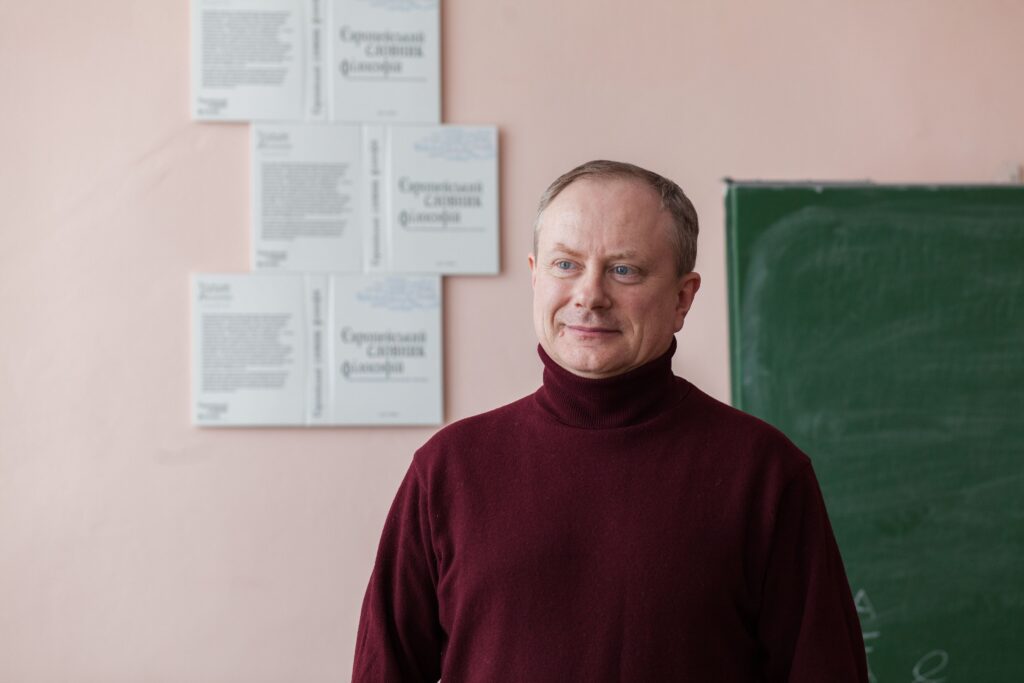
Doctor of Philosophy, professor, translator and historian of European philosophy

Class 1.
The problem of skepticism. The undermining of all values and the skeptical way of life
What can we respect ourselves for? (morality, education, and freedom)
Final case studies: the problem of autonomous morality and how to make a difficult decision.
Class 2.
Freedom and control over the emotions of the soul
Nobility
Final cases: justice and Capuchins and Turing’s moral test: is it possible to distinguish between an “educated person” and a “moral person”? And is there really a difference between them?
Class 2
Freedom and control over the emotions of the soul
Nobility
Final cases: justice and Capuchins and Turing’s moral test: is it possible to distinguish between an “educated person” and a “moral person”? And is there really a difference between them?
10, Dobrovolchykh batalyoniv str., Kyiv