
Episode 1
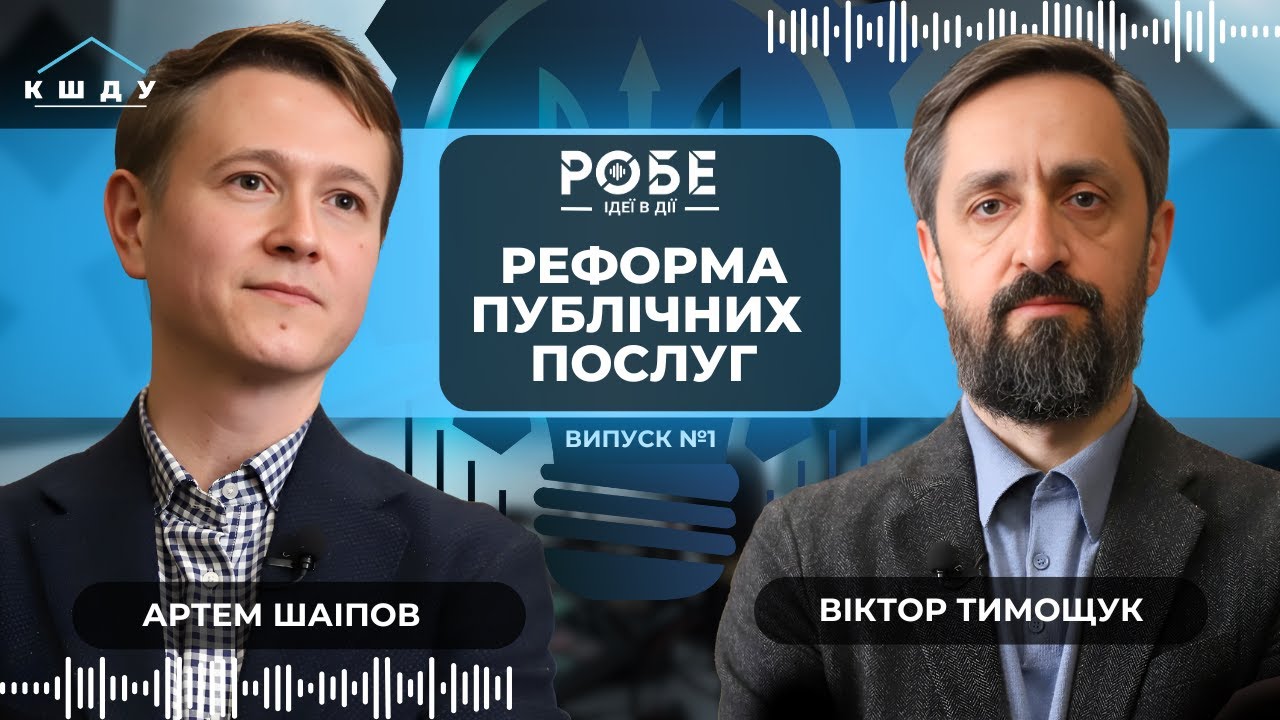
The guest of the first episode of our podcast is Viktor Tymoshchuk, PhD in Law, Deputy Chairman of the Board of the Centre of Policy and Legal Reform, Senior Research Fellow at the V.M. Koretsky Institute of State and Law of the National Academy of Sciences of Ukraine.
The interview is about Viktor Tymoshchuk’s life mission in creating systemic reforms of the ‘state-people’, developing expert leadership and overcoming challenges in implementing public service reform.
In this episode:
- How ASCs were created for people and by people who believed in the principles of ‘less corruption, less bureaucracy, more comfort’ for every Ukrainian.
- Who and how contributed to this reform.
- How Luhansk once competed with Vinnytsia for leadership in change.
- Why space, transparent walls and architectural solutions are important for public trust in the state.
Episode 2
We invite you to watch the second episode of the podcast Policy in Action podcast, created at the Kyiv School of Management together with Artem Shaipov.
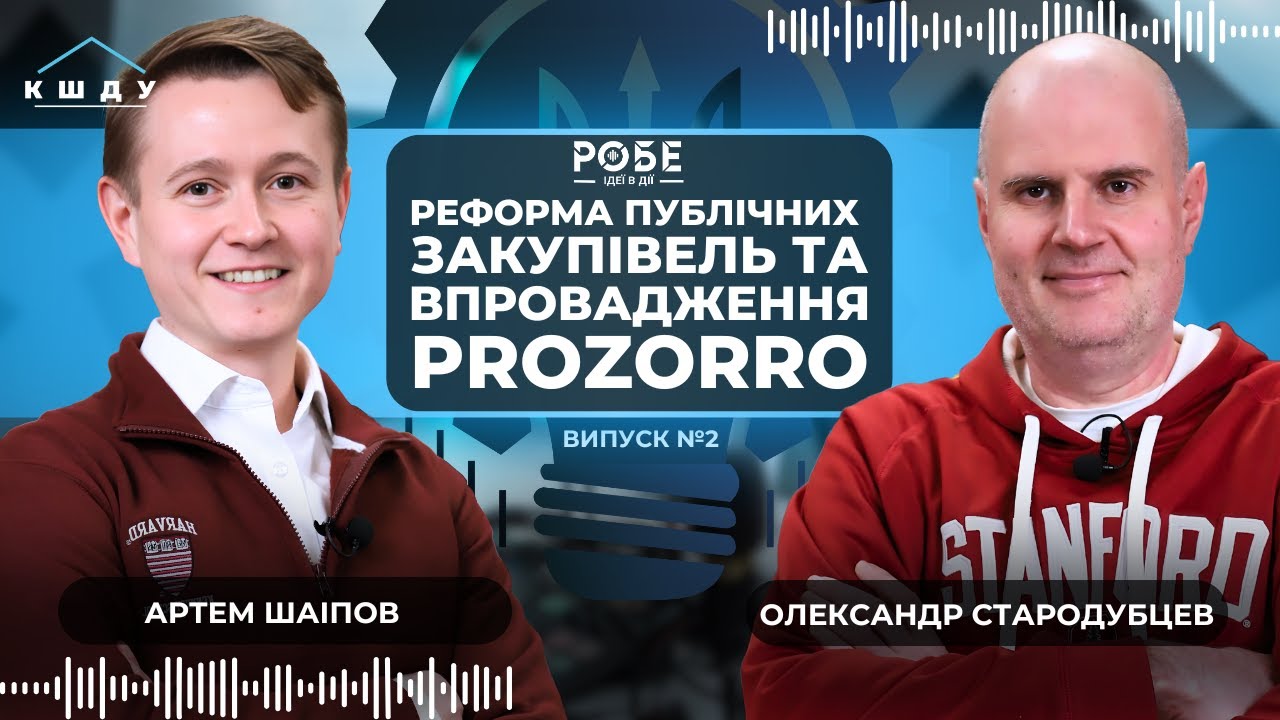
The central topic of this episode is public procurement reform and the implementation of Prozorro. The guest of this issue is Oleksandr Starodubtsev, a reformer who was one of the key figures in finding the optimal model and implementing the public procurement system that is now recognised worldwide.
‘We didn’t like anything we found in the world, so we came up with our own…’ – O. Starodubtsev.
We are grateful to Oleksandr for sharing his experience, insights and lessons learnt in implementing the Prozorro policy.
In this episode:
- How the team and the mechanism of transparent procurement were ‘forged in steel’ and what were the most important stages;
- The hard work of the key inspirers of this complex but very successful reform;
- Find out what is the secret of the success of the public procurement policy implementation. First-hand answers from a person who, together with his team, has implemented dramatic changes for the better.
Episode 3
We continue to uncover new dimensions of public policy implementation within the framework of Artem Shaipov’s podcast ‘Policy in Action’ in cooperation with Kyiv School of Public Administration.
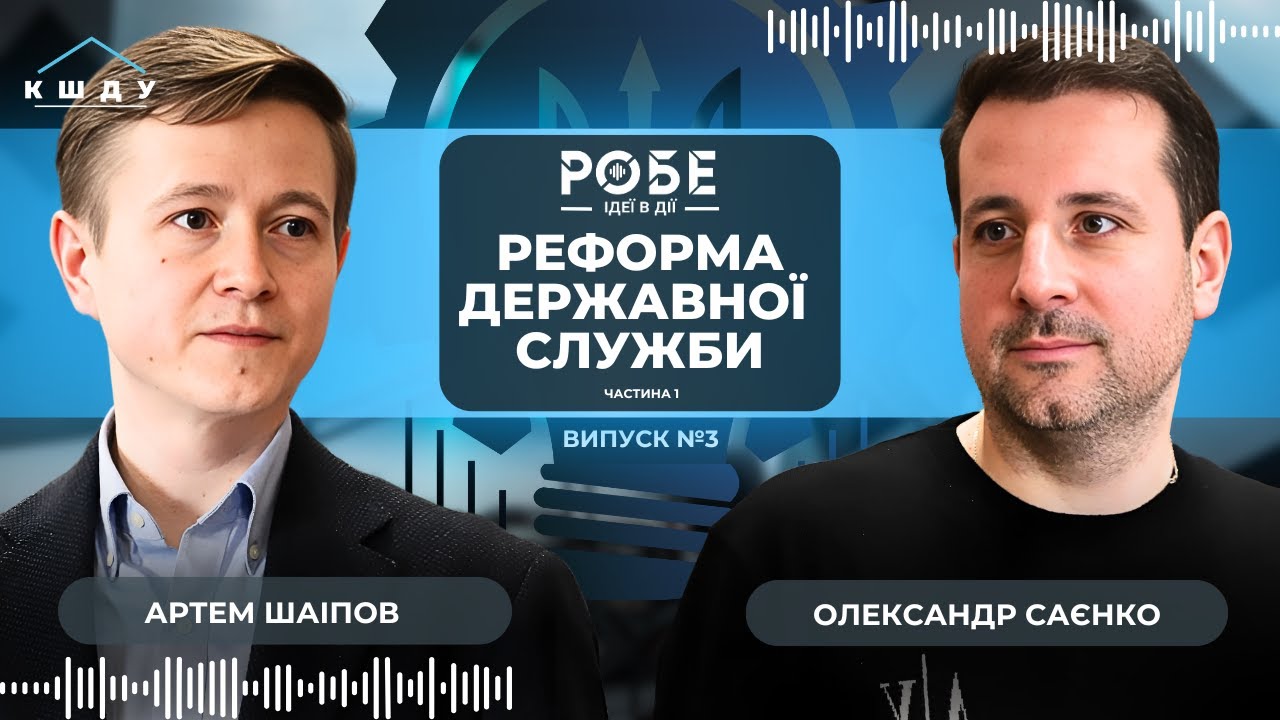
In the new episode, we talk to Oleksandr Saienko, a statesman and public figure who was at the forefront of the civil service reform, and reflect on the implementation of this key reform and the lessons learnt.
Reforms are primarily about people. Oleksandr Saienko knows this not from textbooks – he was a bureaucrat and political leader in places where understanding of the problem and its causes was formed, and solutions were sought, which under his leadership were transformed into action.
‘Any reform is always about compromise, and without starting, you don’t know where the boundaries of this compromise are,’ says Sayenko. Together with his team, he implemented the reform,
to make the bureaucratic state apparatus stand at the crossroads of citizens’ interests and to ensure that the bureaucracy was able to fulfil the political agenda.
This podcast is not only about policy implementation, but also about choice. The choice to serve the state. The choice to understand that every signed document is not just a piece of paper, but people’s lives. The choice to develop the country, even when resistance seems insurmountable.
Listen and learn from the experience of change leaders, discuss and share with your friends and colleagues, because reforms do not happen by themselves – they are created by people, just like the country we live in today and want to live in tomorrow.
Episode 4
‘Ukrainians made their army strong because they realised that it was a matter of their survival. And now we need to understand that without a strong civil service, we will not have a state.’ – Starodubtsev
Together with Artem Shaipov and the leaders of change, we continue to dive into the reform process, analyse challenges, solutions and long-term consequences in the podcast ‘Policy in Action’, created at the Kyiv School of Public Administration.
So, we invite you to watch, reflect and discuss in the comments.
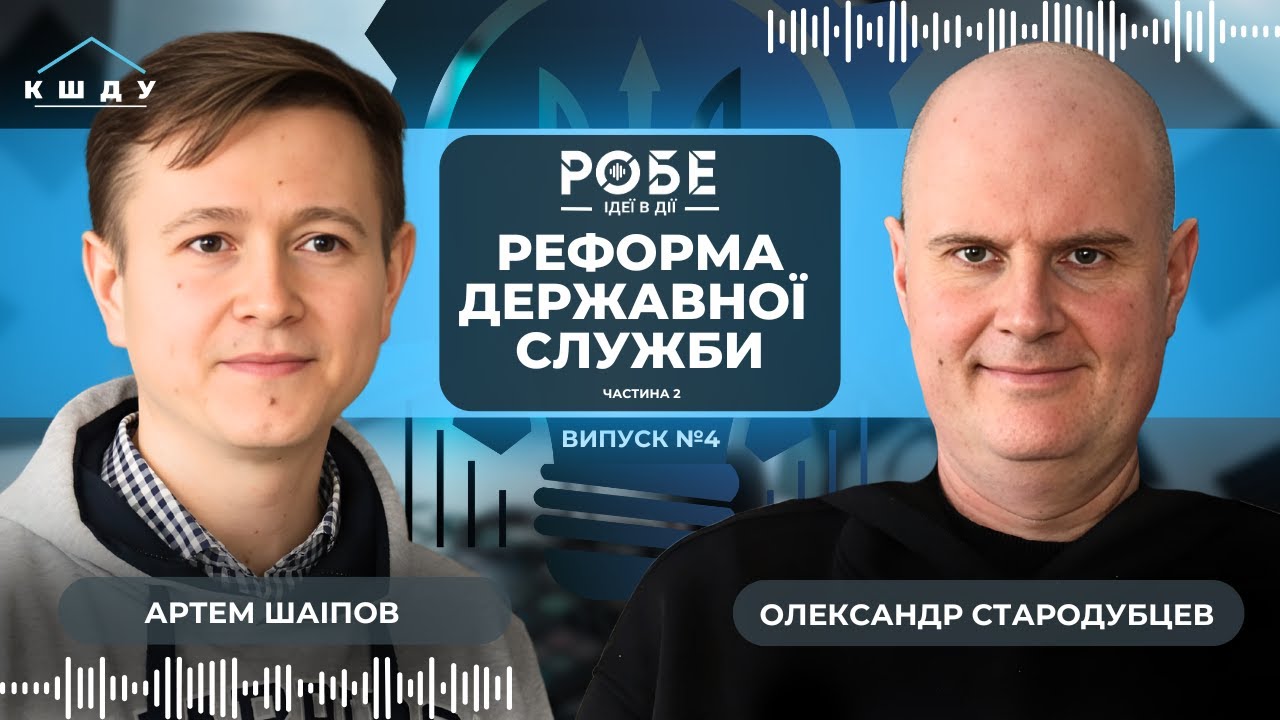
This episode presents the second part of the discussion on civil service reform. Our guest is Oleksandr Starodubtsev, a man who not only promoted the reform at the level of civil society, but also tried to change the system from within, heading the National Agency on Civil Service.
We talk about why the civil service is key to Ukraine’s European future, what political decisions can destroy or accelerate reforms, and what needs to be done to make government agencies truly work for people, not just for the sake of process. We also discussed changes in organisational culture as a key element that distinguishes effective reform from imitation.
Episode 5
What reform has fundamentally changed Ukraine and how did it help us survive the Great War? Why would it have been much harder without it?
☝️ The answers are in the new episode of the podcast ‘Policy in Action’, created by the Kyiv School of Public Administration together with Artem Shaipov.
Decentralisation is one of the most ambitious reforms in the history of Ukraine, and this episode is dedicated to a conversation with Ivan Lukera, who played a leading role in it.
After the Euromaidan, decentralisation turned from a theoretical discussion into a real process. Authorities, experts and the public joined forces to empower local governments, give communities more responsibility and resources. At first, there was a lot of resistance, but step by step, the reform became irreversible.
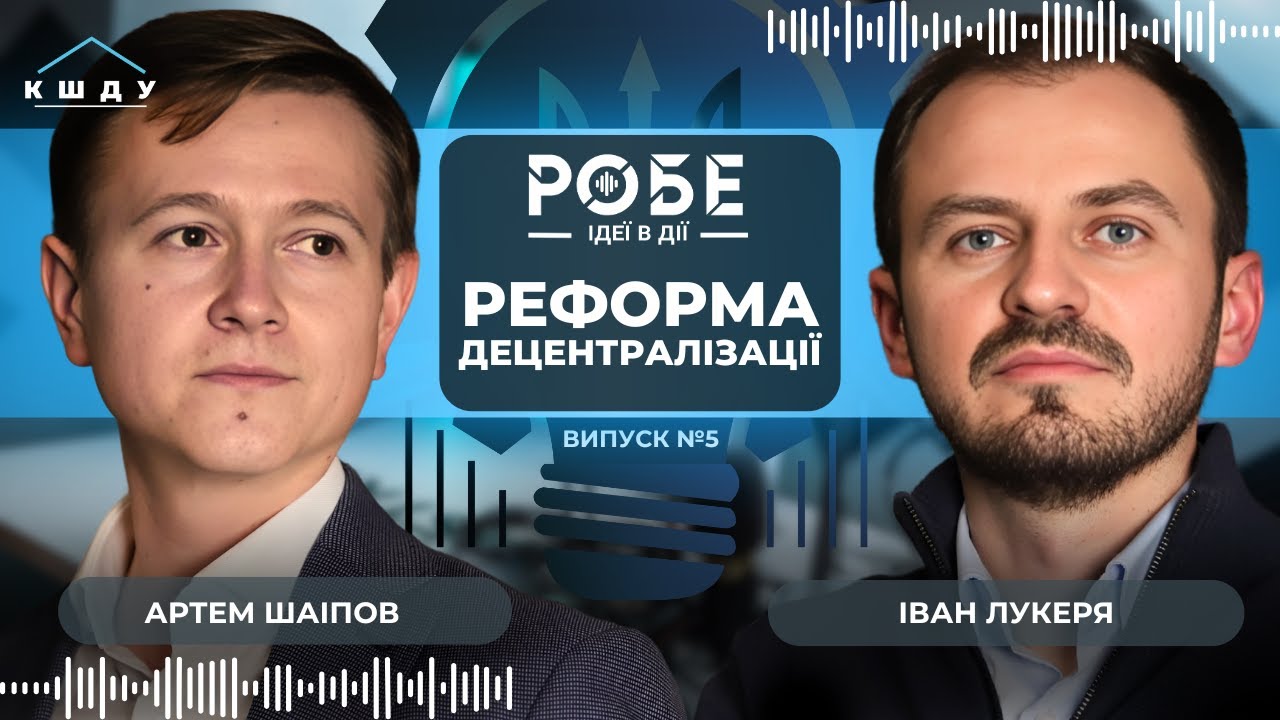
‘Systemic reforms cannot be done in one law or resolution. They require a long preparation and implementation, which is why decentralisation has become successful’, Ivan Lukerya.
Listen to the interview:
- How the reform took place from the perspective of a change agent;
- How to think and act to make systemic changes a reality;
- Resistance and sabotage in the government, parliament and on the ground;
- About the first elections in amalgamated communities;
- How decentralisation came in handy during the war.
Listen to find out how ideas become actions and actions become changes
Episode 6
‘The main problem is not people, but the system. If you come in a new uniform but work in the old conditions, sooner or later the system will break you.’
– Oleksiy Biloshytskyi
Welcome to the new episode of the KSPA podcast ‘Policy in Action’ 👇🏻
The guest of Artem Shaipov’s studio is Oleksiy Biloshytskyi, First Deputy Head of the Patrol Police Department and one of the key drivers of the reform.
The patrol police reform proves that even the most complex systems can be changed.
The struggle continues, but the main thing is that changes are happening. And once they have started, they cannot be stopped.
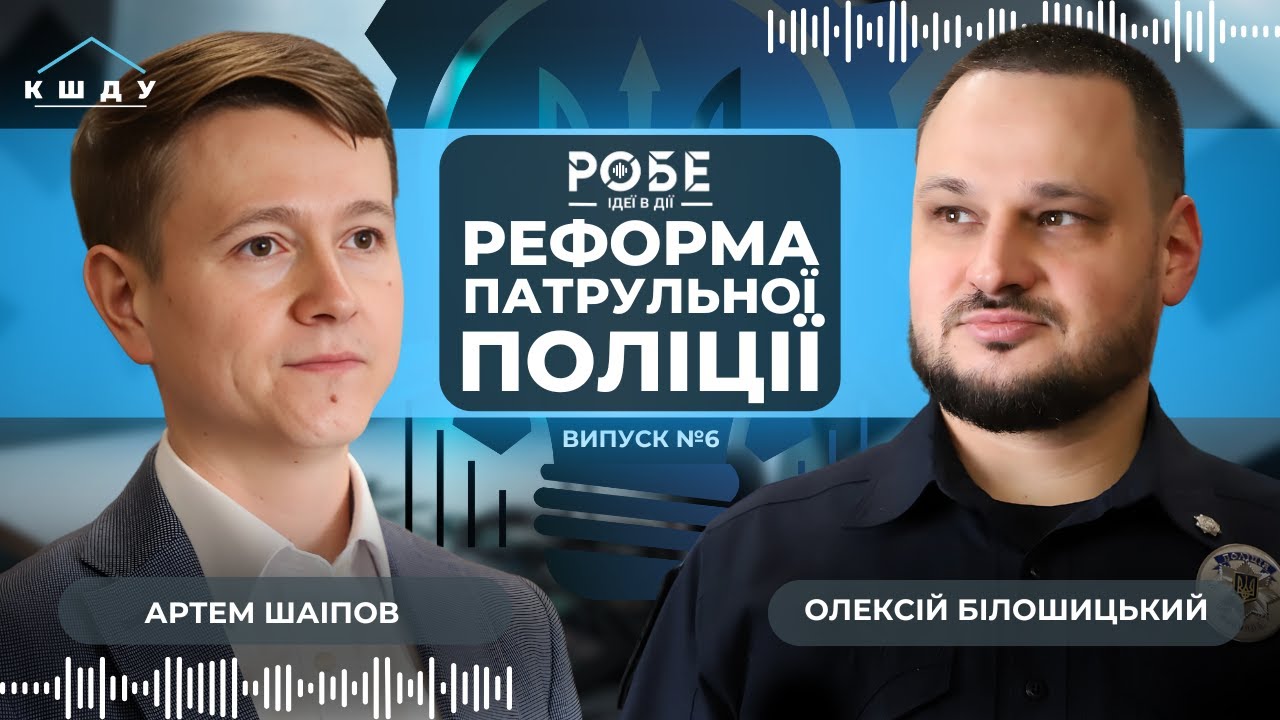
This is not about official reports, but about reality:
- How did the reform get off the ground?
- What did it mean to recruit people from scratch?
- How was the concrete system of corruption and unprofessionalism destroyed?
- What are the challenges facing the patrol police today?
‘The Patrol Police has become the first proof that change is possible. It is not just a new service – it is a different system of work, a different vision, different approaches. When sceptics argued: ‘It won’t work,’ the patrol police were already working. And this experience has become an important impetus for the whole country.’
– Oleksiy Biloshytskyi
Changes start with small steps. They are possible when there is a team, a clear vision and a desire to act.
Episode 7
The new episode of the Policy in Action podcast is about a policy that has literally changed the air in the country.
Artem Shaipov, the author and host of the podcast, and Dmytro Kupyra, Executive Director of the Centre for Civic Representation ‘Life’, discussed the implementation of the policy of banning the smoking of tobacco products and nicotine devices in public places, including restaurants and workplaces.
We invite you to join us to learn how ideas become actions that change the country for the better!
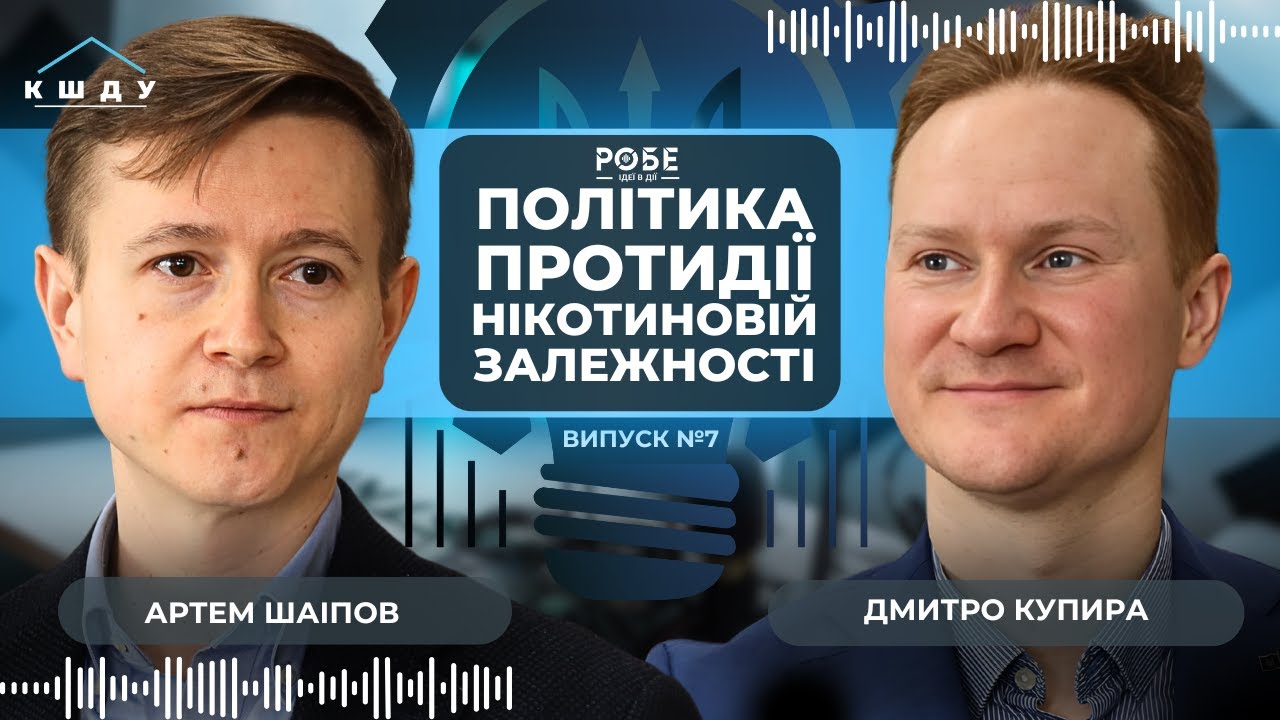
You will hear about how progress in the implementation of the WHO Framework Convention was made possible, the first legislative changes in 2012, important steps in 2021, the resistance of the tobacco industry, business fears and public support – 84% of Ukrainians supported the changes, even those who smoke.
Listen to the full version of the 7th episode of the podcast created at the Kyiv School of Public Administration to hear the inspiring story of how we managed to unite efforts to protect the health of millions and what lessons can be learned from this success story.
Episode 8
We present the eighth episode of the podcast ‘Policy in Action,’ created within the walls of the KSPA.
But not the kind that warms, but the kind that destroys, and about the policy of counteracting the burning of dry vegetation, which is becoming increasingly acute in Ukraine.
Every year, it’s not just ash and smoke. It’s:
• billions in losses,
• poisoned air,
• destroyed ecosystems,
• and worst of all — human lives.
Our guest is an anthropologist and researcher who has worked with the United Nations Development Programme on real solutions: implementing policies and reducing the scale of stubble, leaf, and agricultural waste burning.
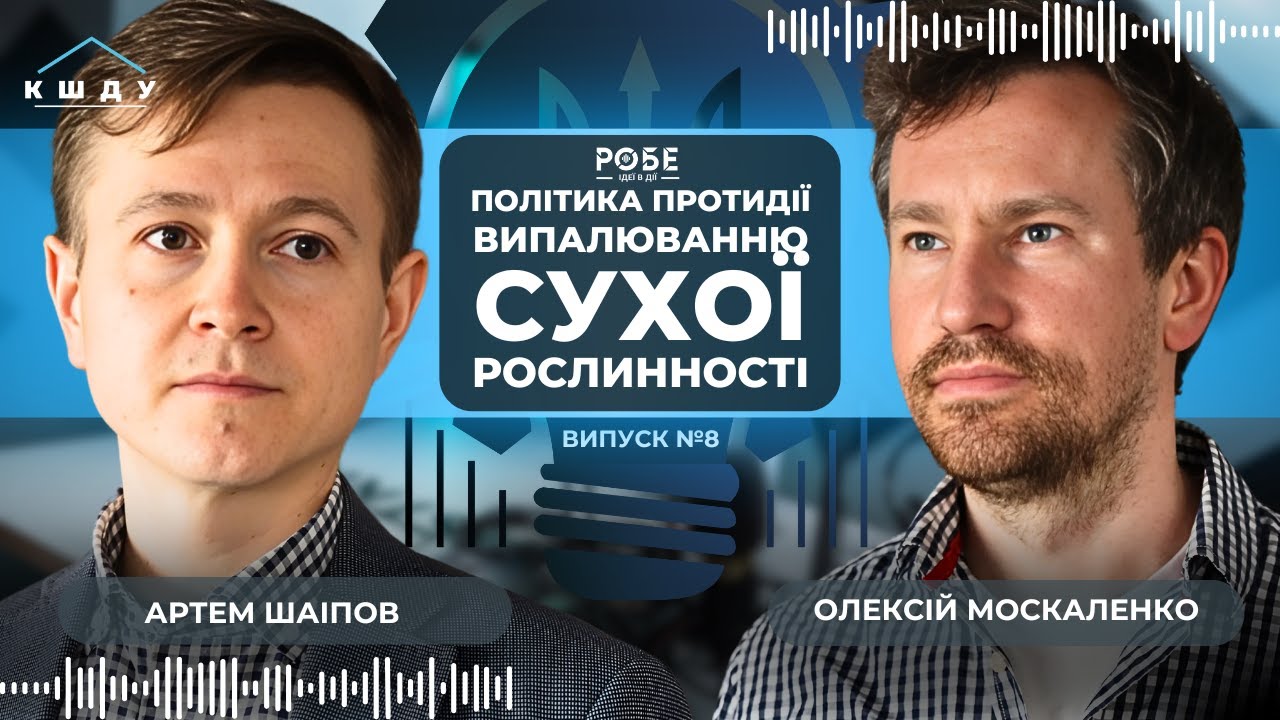
What we often call a ‘bad habit’ is actually a microcosm of deeply rooted practices: domestic, emotional, agricultural, and even social. The research identified more than 30 reasons why Ukrainians continue to burn dry vegetation — from a lack of alternatives to an emotional attachment to fire, from habit to revenge on neighbours.
In this episode:
• what has been implemented and what has not
• how behaviour is changing in communities where choices are available
• and what is needed to replace smoke with good practices.
Listen. Share. Talk about what matters and make a difference!
Episode 9
This time, Artem Shaipov talks to Hanna Shelest, PhD in Political Science, Director of Security Studies at the Foreign Policy Council ‘Ukrainian Prism’ and Chairman of the Supervisory Board of the Ukrainian Institute.
The conversation focused on the reform of the Ministry of Foreign Affairs of Ukraine and the diplomatic service. They talked not just about changes, but about a deep understanding of the process: why it is difficult to introduce new things in public policy, how traditions and closed systems hinder reforms, and what is needed for a real renewal to take place.
Listen to the new episode, share your impressions, and remember: changes do not happen by themselves. They are created by people of action!
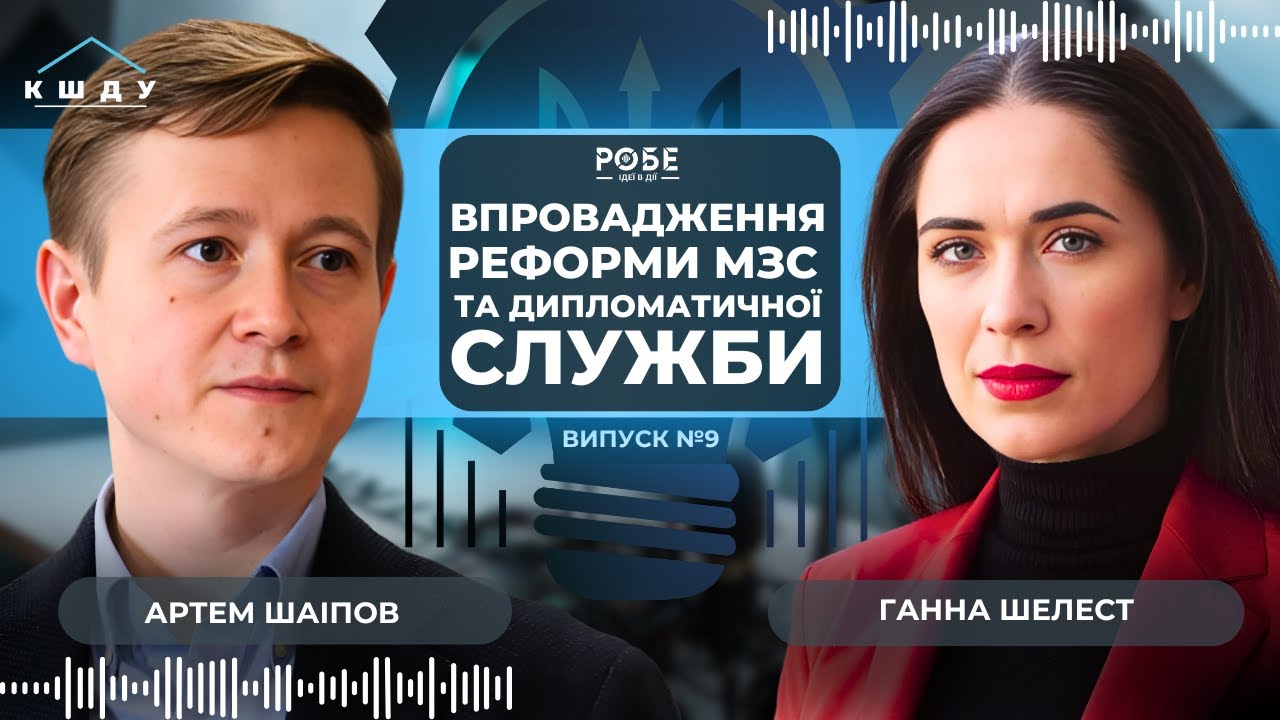
The reform has been compared to climbing stairs – slowly, with stops at each floor, sometimes even for coffee. The reform of the MFA and the diplomatic service is a long, tedious, but necessary process, and this issue will allow you to better understand its course and cause-and-effect relationships.
The episode also tells how the war, despite all the difficulties, has opened up an opportunity to demonstrate the strength of the diplomatic service and launch real, tangible changes: increased gender equality, youth engagement, and intensified public communication.
But most importantly, real transformations are impossible without a systematic approach, financial and human resources determination, openness to external expertise and readiness for an honest audit of the state of affairs.
Episode 10
We invite you to watch the tenth episode of the KSPA podcast — ‘Policy in Action’! The anniversary edition is now available in a new video format!
In this episode of the podcast ‘Policy in Action,’ Artem Shaipov talks to Dmytro Romanovych, one of the drivers behind the implementation of the state programme ‘Affordable Medicines.’
How can we make sure that everything falls into place and that this life-saving reform actually works?
Watch the episode on our YouTube channel.
Be sure to subscribe, leave comments, and share with those who care about how changes are being implemented in Ukraine.
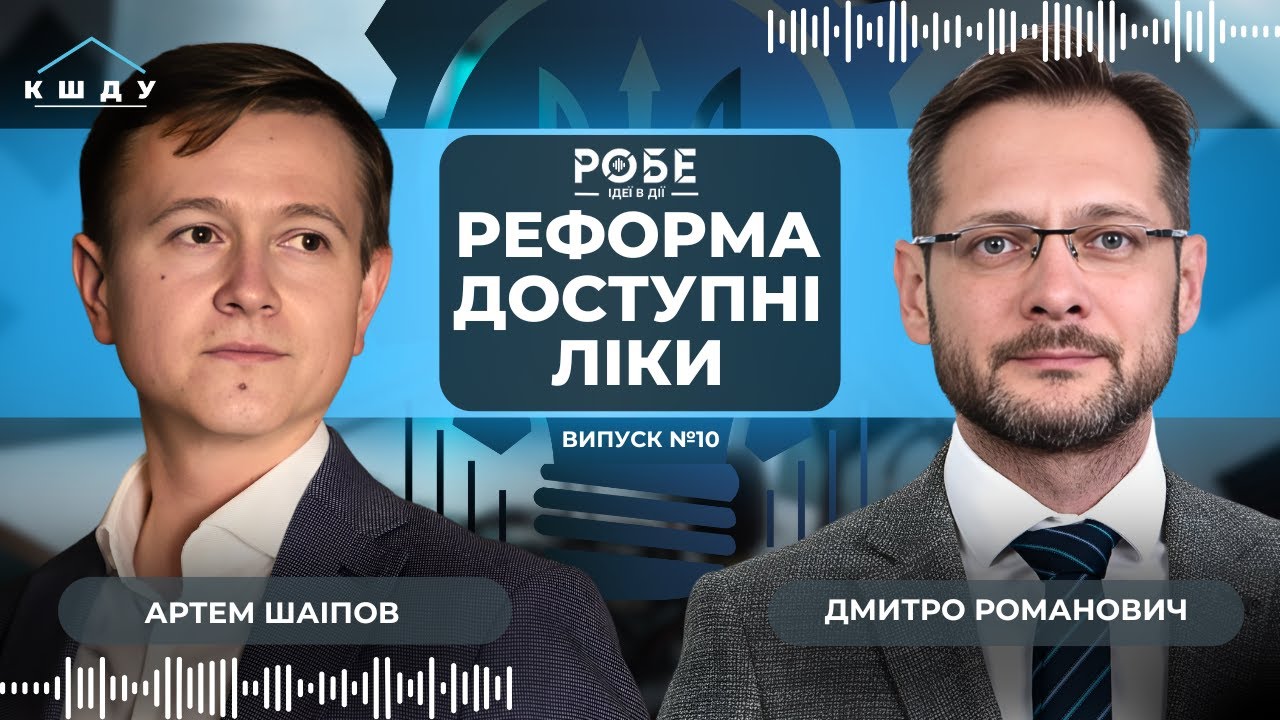
DMITRO ROMANOVYCH:
How to quickly implement a reform that works
Today we will discuss the following:
- How and why the idea of reform arose;
- What went wrong with the first attempts;
- How to bring together stakeholders with different interests and reach an understanding;
- The role of political leadership and bureaucracy;
- How to build and maintain trust in the state;
- An iterative approach to public policy in practice.
This is an honest conversation about difficult decisions, crisis situations, compromises — and how to achieve results despite everything.
Episode 11
The new episode of the podcast ‘Policy in Action’ is now available on all platforms!
This time, Artem Shaipov talks to Yevhen Klopotenko, chef, creative entrepreneur and public figure, about a unique case: how borscht became a UNESCO Intangible Cultural Heritage item.
This is a story about how cooking becomes a political tool, about ‘soft power,’ narratives, the fight against Russian propaganda — and about how simple borscht became a symbol of Ukraine’s presence in the world.
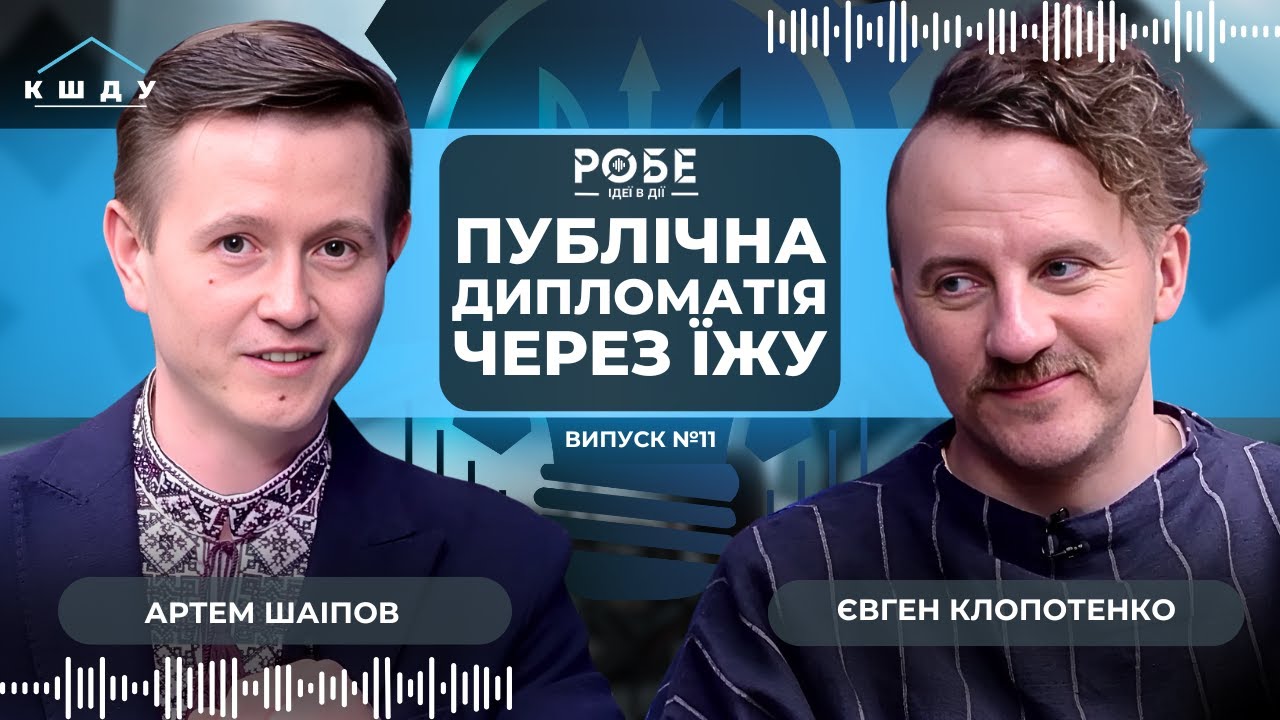
Together, they discuss:
- how the idea to submit borscht to UNESCO came about;
- what ‘public diplomacy through food’ means;
- how bureaucracy can become an ally if you know the rules of the game;
- and why each of us can be part of big changes — even through borscht.
Listen, think, share — and remember: change doesn’t just happen — it’s made by people taking action.
Episode 12
The new episode of the podcast ‘Policy in Action’ is now available on all platforms!
What does it mean to implement foreign policy and be the face of Ukraine on the other side of the world — in Australia and New Zealand?
This time, Artem Shaipov has a candid conversation with Ukrainian Ambassador Vasyl Myroshnychenko about diplomacy in times of war, international lobbying, the daily struggle for support, and the invisible front of foreign policy.
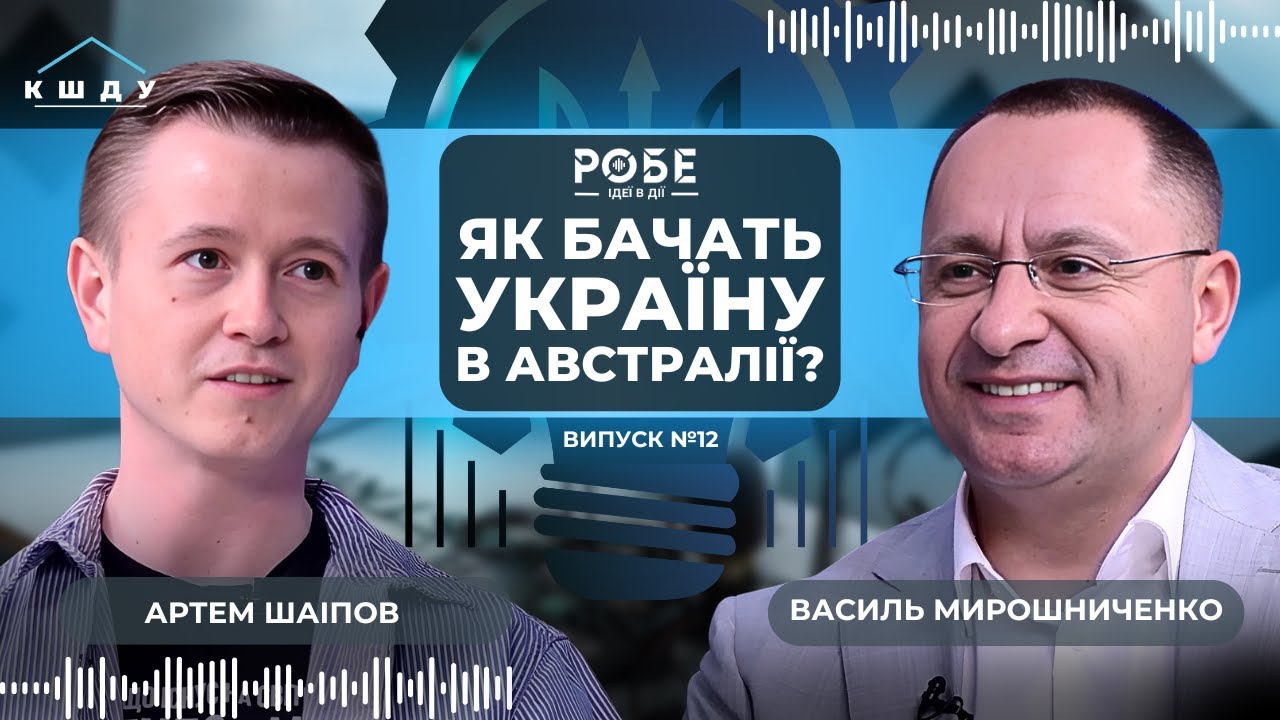
Today we will talk about the following:
- How to make Ukraine recognisable in a region where we have never been?
- Why is Zelensky called ‘Churchill with an iPhone’ in Australia?
- How is the Kremlin promoting its game in the global South — and what does this threaten?
- What is Ukrainian diplomacy doing when news from the front disappears from the world’s headlines?
This broadcast is about those who are fighting for Ukraine with words, symbols and convictions.
Episode 13
POLICY IN ACTIONS
The Business Ombudsman Council — an institution built on trust
This episode features a conversation with Yaroslav Hrehirchak, one of the founding fathers and long-time deputy of the Business Ombudsman of Ukraine. We explore how one innovative mechanism changed the relationship between business and the state, became an institution of trust and influence, and turned individual complaints from entrepreneurs into political decisions.
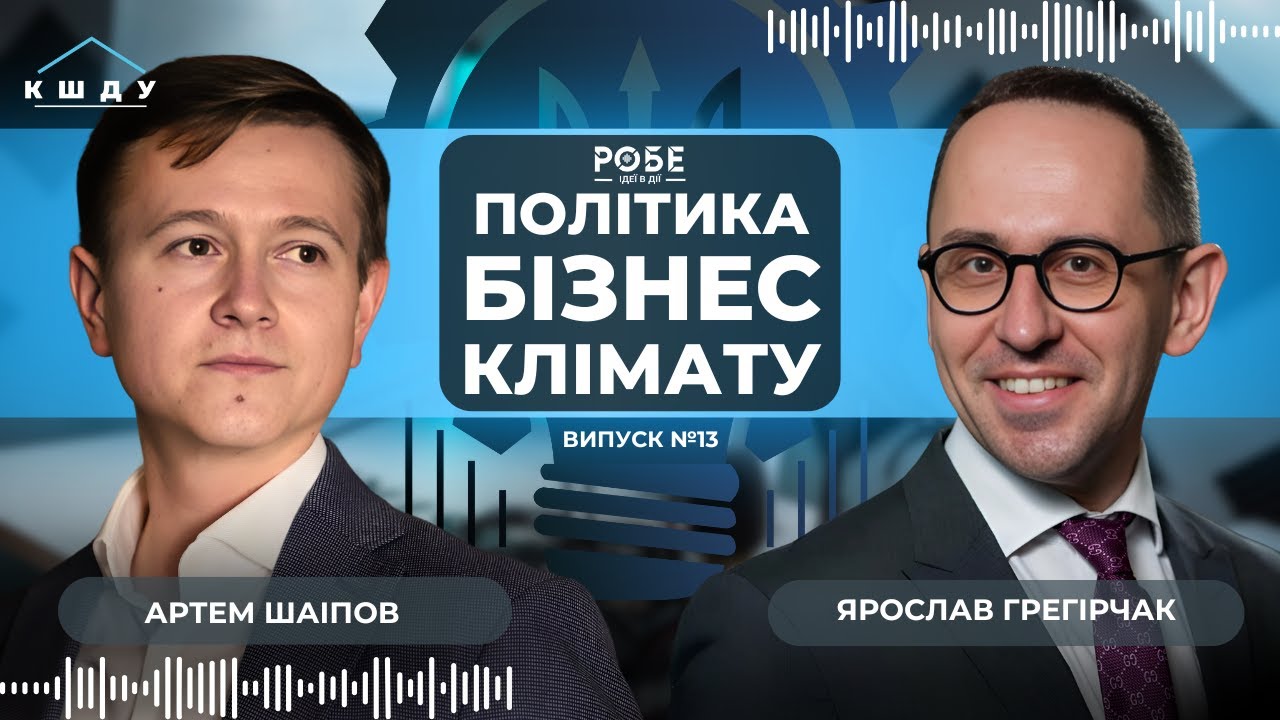
Together, they discuss:
- How does the multilateral pre-trial dispute resolution mechanism work?
- What is the power of ‘policy work’ — and what does it take for it to truly change the rules of the game?
- Why are 90% of individual recommendations implemented, but only half of systemic ones?
This episode is about the depth that experience brings. About changes that don’t happen on their own. And about those who build trust in the system.
Listen and share.
Episode 14
The new episode of the podcast ‘Policy in Action’ is now available on all platforms!
This time, Artem Shaipov talks to Roman Kobets, philosopher, analyst and public policy researcher, about the obstacles and barriers to public policy implementation.
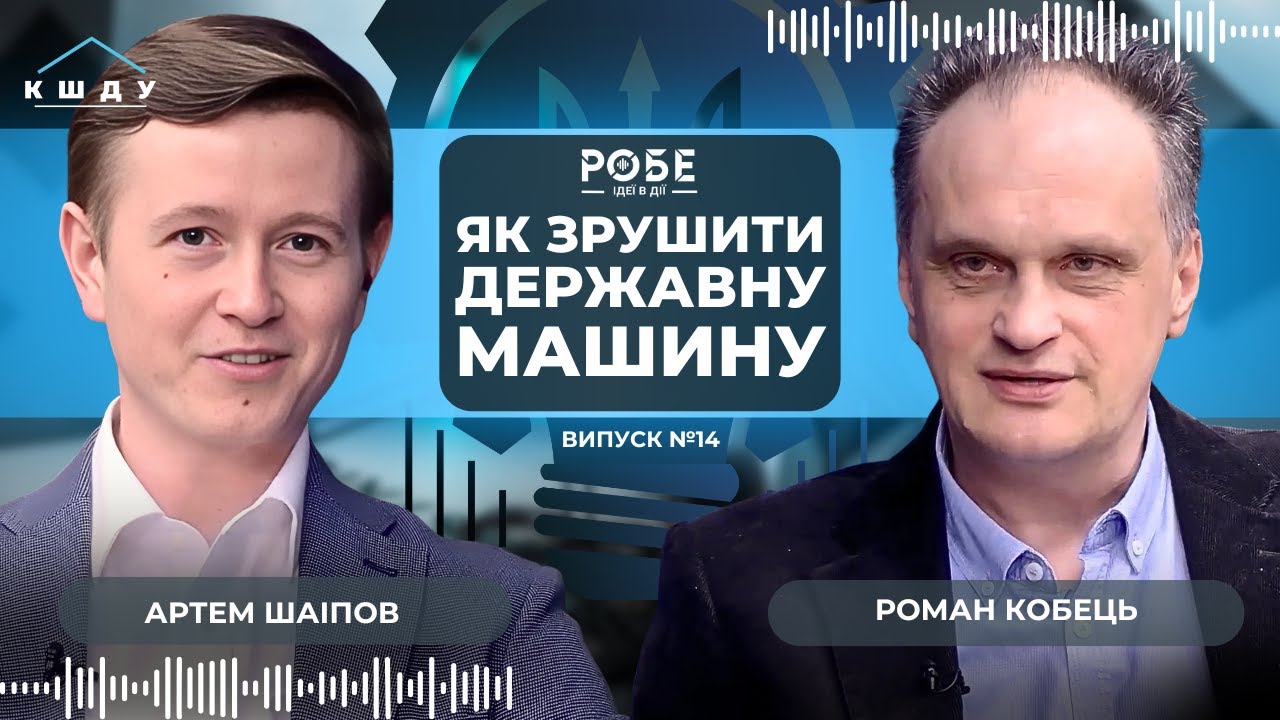
The focus of the conversation is the state: not as an abstraction, but as a system that must function. We speak frankly about
- worldview and systemic barriers that hinder the implementation of public policy
- why public policy is reduced to ‘just writing a law’
- and why lawyers involved in the formation and implementation of public policy substitute it with formalities.This is a sincere and profound conversation about how to overcome institutional stagnation, develop systems thinking, and why a democratic state cannot function without the involvement of civil society.If you are concerned about the state of socially important issues, feel that ‘something is wrong’ but cannot explain why, this episode is for you.
Listen, think, share — and remember: change does not come on its own — it is made by people of action!
Episode 15
A conversation between Artem Shaipov and Kostyantyn Koshelenko — former Deputy Minister of Social Policy for Digital Transformation (2021–2025) and author of the book «Management in Wartime»
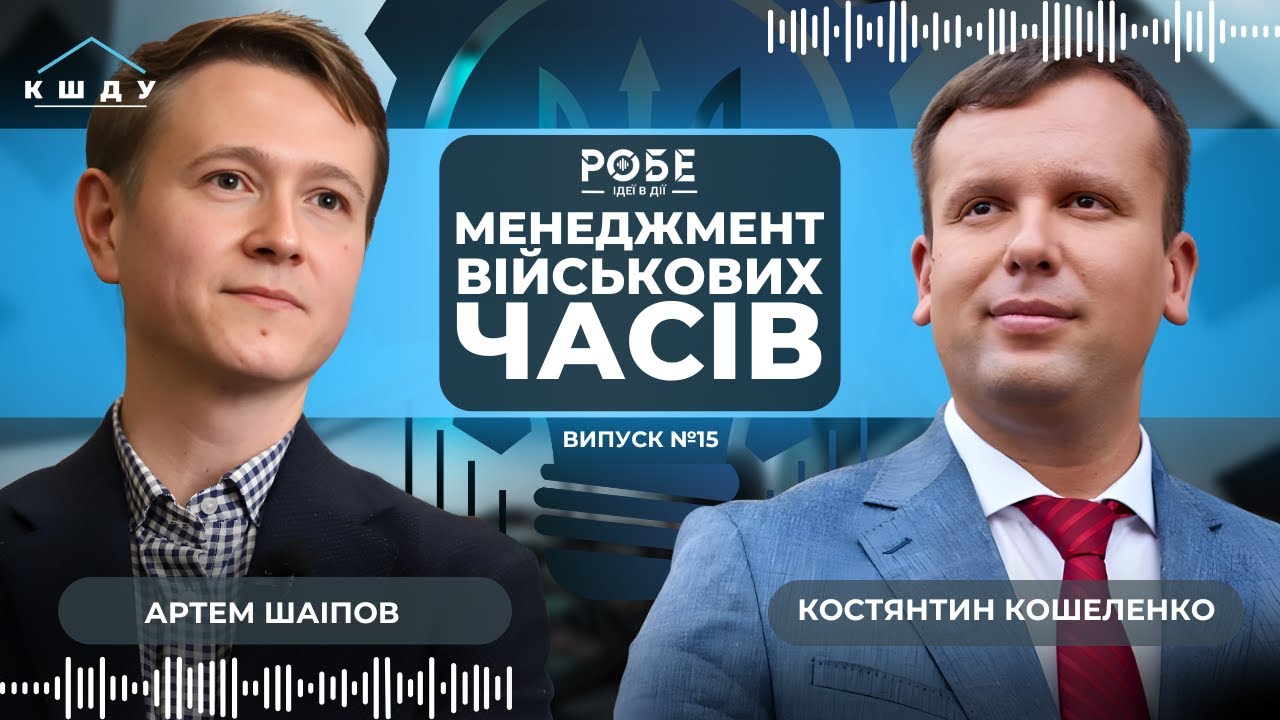
The conversation focuses on:
- How the old, post-Soviet paper-based social support system was restructured to meet modern challenges
- How and by whom the unified social register, electronic case management and digital tools to help people were created
- How to act when the old system breaks down under the pressure of war: millions of displaced people, loss of funding, chaos — and yet problems must be solved and people must be served
Episode 16
In this episode, Artem Shaipov speaks with Pavlo Kovtoniuk, co-founder of the Ukrainian Health Centre and one of the architects of healthcare reform in Ukraine.
This episode is about people who don’t just talk about change — they make it happen.
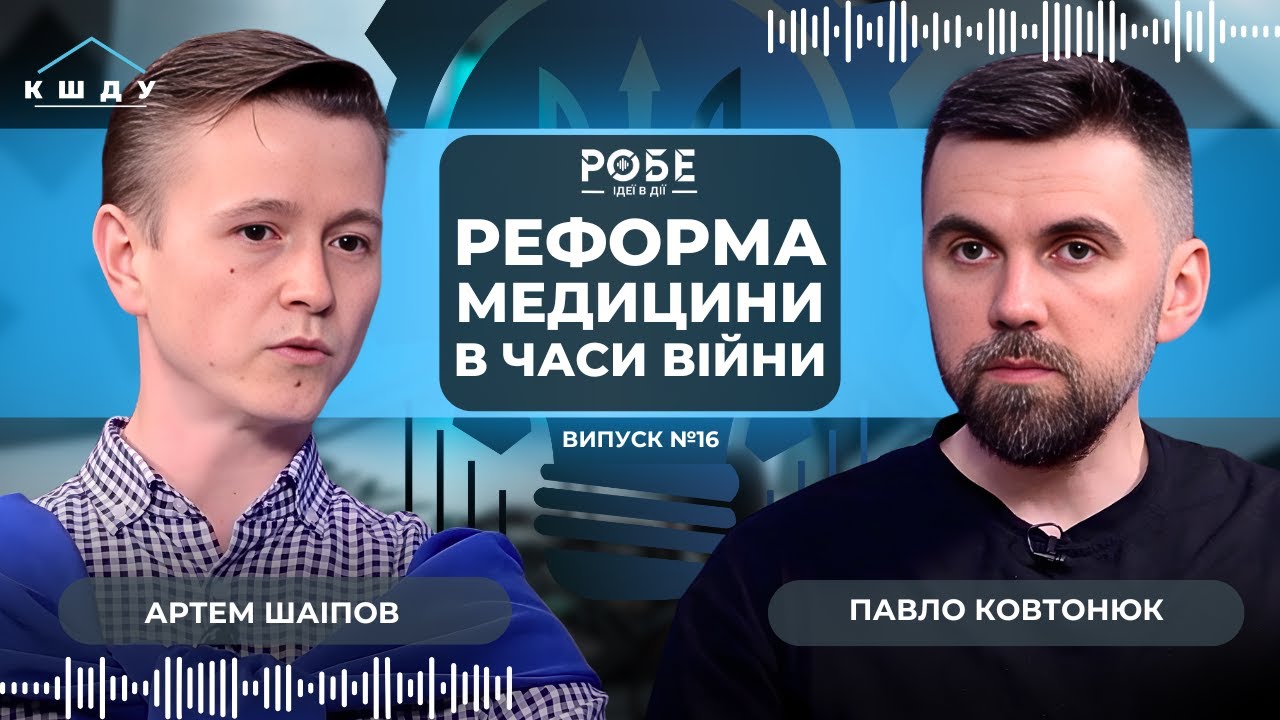
We take an honest, no-nonsense look at:
- how state systems change when there is no room for error;
- why healthcare reform is not about ‘money following the patient’,
- but about responsibility and trust;
- how the Ukrainian Health Centre works and why it has become the
- think tank driving change;
- what it means to carry out reform under the pressure of war whilst
- simultaneously building a system that must function after victory.
Episode 17
Remembrance during wartime cannot be left to chance — otherwise, a country loses not only its rituals, but also its very identity. Why has a minute’s silence become a symbol of unity? How did hromadas force the authorities to heed the call for remembrance? Why does Kyiv still not know whom it is bidding farewell to every day, and what should be done about the flags on the graves of the fallen? Kateryna Datsenko, co-founder of the organisation ‘Vshanuy’, speaks with Artem Shaipov on the podcast ‘Robi. Policy in Action’ on the ‘KSPA Media’ channel about pain, systemic issues, community pressure and a new culture of remembrance.
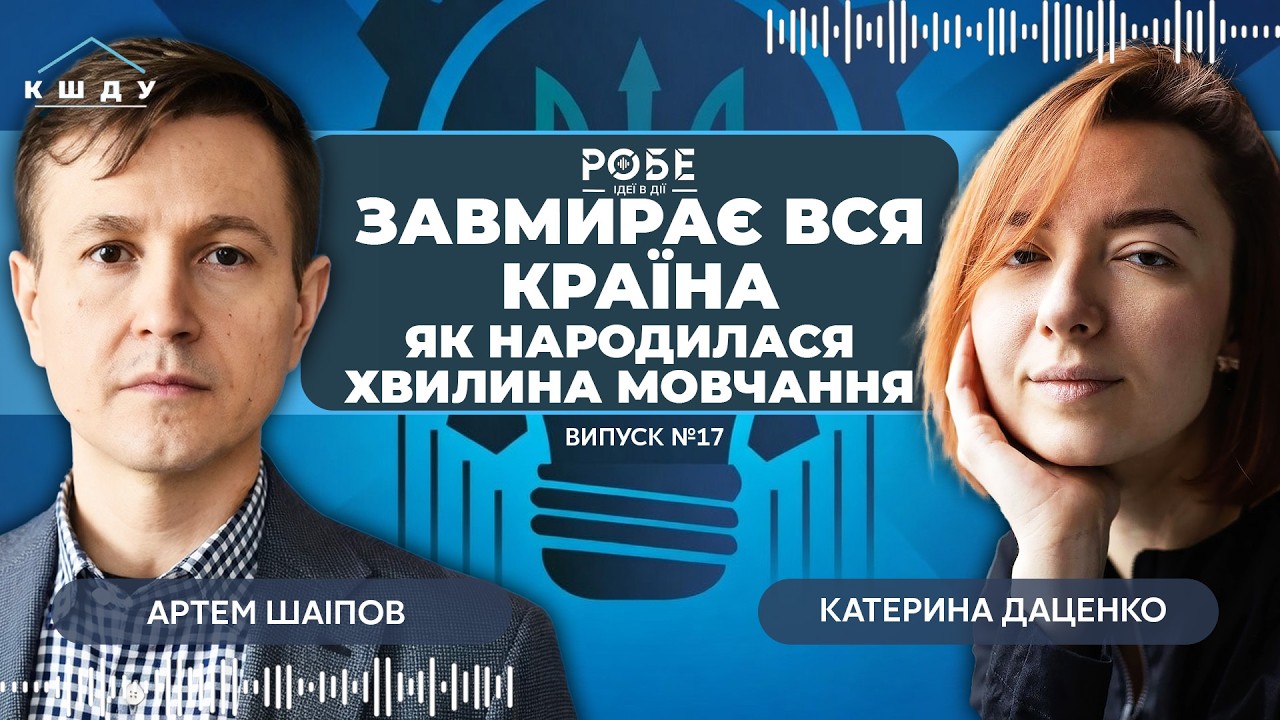
The conversation focuses on:
- A culture of remembrance during wartime
- A minute’s silence as a new social ritual
- Pressure from communities on the state
- The problem of the invisibility of losses
- What to do with symbols of remembrance (flags, burial sites)
Episode 18
Who actually makes the decisions in Ukrainian towns and hromadas? Why is the role of mayors overstated, whilst key processes take place behind the scenes of executive committees, without clear rules or oversight? How has decentralisation shifted the balance of power, and why has martial law effectively reset the system, transferring authority to a single individual? In an interview with Artem Shaipov, Oleksandr Solontay highlights the weaknesses of local politics and explains what lies ahead.
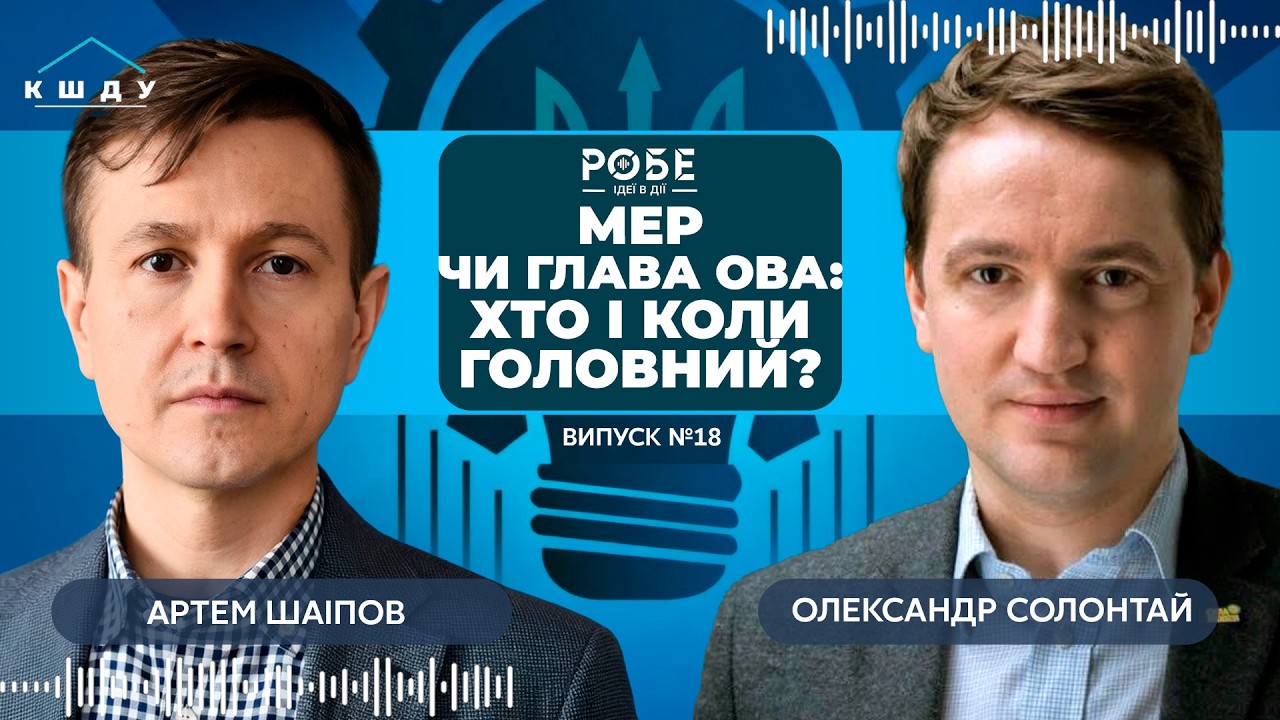
We discussed:
- Who actually makes decisions in hromadas
- The executive committee as a ‘shadow centre’ of governance
- Decentralisation without clear boundaries of responsibility
- Martial law and the concentration of power
- What lies ahead for local self-government